


You may not hear the term “TIC” very often. Yet almost every modern business relies on it in one form or another.
From automotive and electronics to food, chemicals, healthcare, construction, energy and information technology, companies depend on testing, inspection and certification to demonstrate that products, processes and management systems meet required standards for quality, safety and compliance.
TIC — Testing, Inspection and Certification — operates largely behind the scenes. But it provides something fundamental to global business: trust.
As regulation becomes more complex, supply chains more international and corporate responsibilities extend into sustainability, cybersecurity and transparency, the role of TIC is expanding well beyond traditional product quality and safety.
TIC IN BUSINESS
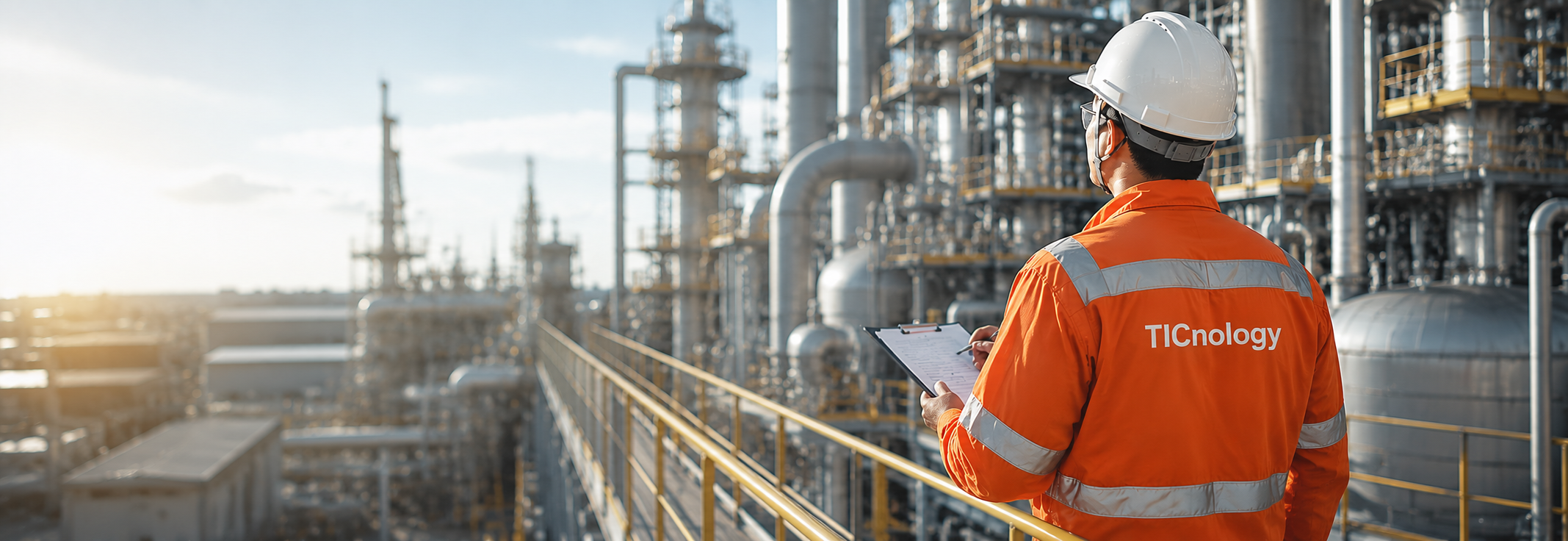
1. TIC Is Embedded Across Modern Industry
Consider how products reach the market.
An automotive manufacturer needs to evaluate safety, durability and performance. An electronics company must verify that its products comply with electrical safety and electromagnetic compatibility requirements in different markets.
Food producers rely on testing and inspection to manage quality and hygiene. Chemical companies must understand whether substances and materials comply with environmental and chemical regulations across multiple jurisdictions.
At the organizational level, companies also use certification schemes such as ISO 9001 for quality management, ISO 14001 for environmental management and ISO/IEC 27001 for information security management.
The industries and requirements differ, but the underlying need is similar: companies must be able to demonstrate that products, processes and organizations meet defined requirements.
This is where TIC enters the picture.
WHAT IS TIC
2. What Is TIC?
TIC stands for Testing, Inspection and Certification.
Although these activities are closely related, they perform different functions within the broader assurance ecosystem.
TESTING
Testing
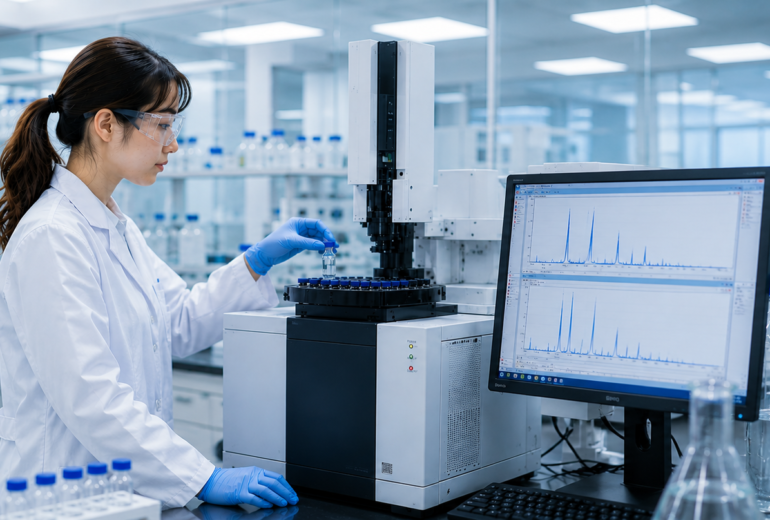
Testing evaluates whether a product, material or component meets specified requirements for performance, safety, quality or other characteristics.
Scientific measurement and analysis provide objective data that manufacturers, regulators, customers and other stakeholders can use to make decisions.
INSPECTION
Inspection
Inspection examines products, facilities, manufacturing processes, equipment or supply chains to determine whether specified requirements are being met.
It can help identify quality and safety risks not only in finished products but throughout production and operational processes.
CERTIFICATION
Certification
Certification provides independent confirmation that a product, process, system or organization conforms to specified standards or requirements.
Third-party certification can therefore provide an important signal of credibility between companies, customers, regulators and markets.
Together, these activities form a broad infrastructure of conformity assessment and assurance that supports economic activity across borders.
TRUST INFRASTRUCTURE
3. TIC as Trust Infrastructure
TIC should not be understood simply as a collection of laboratory tests, factory inspections and certificates.
Its broader economic function is to reduce uncertainty.
A manufacturer needs confidence in materials supplied by another company. A buyer needs confidence that products meet contractual specifications. Regulators need evidence that applicable requirements are being addressed. Consumers expect products to be safe. Investors increasingly require credible information about environmental and other non-financial performance.
Independent testing, inspection and certification can provide objective evidence between these different parties.
In this sense, TIC connects businesses, consumers, regulators and society through trust.
That function becomes particularly important in global supply chains, where manufacturers, suppliers, laboratories, certification bodies and customers may operate in different countries under different regulatory systems.
TIC helps make those relationships work.
EXPANDING ROLE
4. From Quality and Safety to Sustainability and Digital Trust
Historically, much of the TIC industry’s role has been associated with product quality, safety and regulatory compliance.
Those areas remain fundamental.
But the scope of assurance is expanding.
Companies today face growing expectations around sustainability, circular economy principles, supply-chain transparency, information security and increasingly complex environmental regulation.
New regulatory frameworks are also creating requirements around product information and lifecycle data. The emergence of concepts such as the Digital Product Passport (DPP) illustrates how physical products, regulatory compliance and digital information are beginning to converge.
This evolution changes what businesses need from the TIC industry.
Testing may increasingly be required to verify environmental or material characteristics. Inspection may extend deeper into supply chains. Certification and assurance services may need to address new management systems, sustainability claims, cybersecurity and data integrity.
As corporate claims become more detailed and regulation becomes more sophisticated, the need for credible evidence is likely to increase as well.
EVERYDAY TIC
5. TIC Is Already Part of Everyday Life
Most people rarely think about the TIC industry.
Yet they interact every day with products and infrastructure that have been tested, inspected or certified.
Cars, smartphones, household appliances, food products, buildings, industrial equipment and medical devices all depend, to varying degrees, on systems designed to evaluate quality, safety, performance or compliance.
The industry is therefore unusual.
It is largely invisible to the general public, but deeply embedded in the functioning of the modern economy.
“TIC is everywhere” is more than a slogan.
Behind a vast number of products, transactions and supply chains lies some form of testing, inspection, certification or related assurance activity.
WHY TIC MATTERS MORE
6. Why the Importance of TIC Is Growing
Several structural changes are increasing the strategic importance of the TIC industry.
Global supply chains have become more complex. Products may be designed in one country, manufactured in another, assembled elsewhere and sold across dozens of regulatory jurisdictions.
At the same time, regulation is expanding into areas that were previously outside the traditional boundaries of product compliance.
Environmental performance, chemical substances, recycled content, cybersecurity, traceability and product lifecycle information are increasingly becoming part of the compliance landscape.
A FUNDAMENTAL QUESTION
How can companies demonstrate that what they claim is actually true?
Documentation alone is not always sufficient.
Markets increasingly require measurable data, traceable processes and credible third-party verification.
This is precisely where the capabilities of the TIC industry become strategically important.
TICNOLOGY JAPAN VIEW
TICnology Japan View
The future of the TIC industry will not be defined simply by an increase in the number of tests, inspections or certificates.
The more significant change is the expansion of what needs to be independently verified.
Traditional TIC demand was built around quality, safety and conformity. The next phase is increasingly connected to sustainability, environmental regulation, cybersecurity, supply-chain transparency and digital product information.
This shift may also change the competitive structure of the TIC market.
Laboratory capability alone will not always be sufficient. TIC providers will increasingly need to combine technical expertise with regulatory knowledge, digital infrastructure, data management and international networks.
For manufacturers, meanwhile, TIC should no longer be viewed only as a compliance cost incurred immediately before a product enters the market.
Used strategically, testing, inspection and certification can help companies identify regulatory risks earlier, improve supply-chain visibility, strengthen market access and build credibility with customers and regulators.
For Japan and other export-oriented Asian economies, this is particularly relevant.
As regulatory requirements evolve across Europe, North America and other major markets, the ability to connect manufacturing capabilities with global testing, inspection and certification resources will increasingly influence competitiveness.
TIC is therefore becoming more than an assurance function.
It is becoming part of the infrastructure that enables companies to participate in global markets.
CONCLUSION
Conclusion
Testing, Inspection and Certification may not be visible to most consumers, but TIC is deeply embedded across modern industry.
It supports product safety and quality, regulatory compliance, international trade and confidence between companies and their stakeholders.
And its role is expanding.
As sustainability, digitalization, cybersecurity, traceability and increasingly complex regulation reshape global business, companies will need more credible ways to demonstrate compliance and substantiate their claims.
The TIC industry provides much of that infrastructure.
TIC IS EVERYWHERE
TIC is everywhere — because trust is required everywhere.
SOURCES
Sources / References
-
TICnology Japan, “TICを利用していない企業は、ほとんど存在しない.” Original Japanese Edition, July 30, 2026.
Original article — TICnology Japan
コメント